Victims of Crime Compensation
On August 4, 2019, a father died in his adult son’s arms during the mass shooting in Dayton, Ohio—a tragedy that claimed nine other lives. Dion Green was Derrick Fudge’s only child. In the months that followed, Dion described the experience as “draining—mentally, spiritually, emotionally, and financially.”
Initially unaware that victim compensation was even an option, he was eventually connected with a victim advocate and submitted an application. In October 2019, he learned that Ohio’s victim compensation program had denied his request for burial assistance—solely because his father had a felony drug conviction from 2011. “When I got the denial letter in the mail, I tore it up and threw it in the trash,” Dion recalled.
Overwhelmed by the appeals process and angered that a nearly decade-old charge could render his father ineligible for aid, he asserted: “Someone’s past shouldn’t determine the future.”
Since that devastating loss, Dion has devoted his life to supporting fellow survivors of gun violence and has become a passionate advocate for reforming victim compensation systems.

Dion’s story is heartbreaking, but it is far from unique. Each year, approximately 14,000 people in the United States die by gun homicide, and hundreds of thousands more survive gun-related crimes. In the aftermath, survivors and their families grapple not only with deep emotional trauma but also with sudden financial strain—from immediate and long-term medical and mental health care, to funeral expenses, to the costs of cleaning a deceased relative’s home. Lost wages may also accumulate as survivors take time away from work to recover, attend therapy, or participate in legal proceedings.
Victim compensation programs are designed to help ease these burdens for survivors of gun crimes and families of those killed. Yet, as Dion’s case illustrates, many are denied assistance due to rigid eligibility rules—such as a prior criminal record, errors in paperwork, missed filing deadlines, or failure to cooperate with law enforcement. These denials often leave victims and families to rely on private donations or crowdfunding campaigns to cover funeral and other urgent costs.
Victim compensation provides direct reimbursement—to or on behalf of crime victims—for expenses including medical and mental health treatment, funeral and burial costs, and lost wages or financial support. Like victim assistance funding under the federal Victims of Crime Act (VOCA), VOCA compensation funding is administered by the Office for Victims of Crime within the U.S. Department of Justice. These federal funds originate from the Crime Victims Fund, which is financed entirely by court fines and fees—not taxpayer dollars—and are distributed annually to states to supplement their own compensation programs. In fiscal year 2019, VOCA compensation paid out a total of $393,749,715 to applicants nationwide.
However, because of Dion and others’ advocacy, as of March 2022, the criminal backgrounds of victims are no longer considered disqualifiers for admission into the Victim Compensation Program in the state of Ohio. Additionally, the possession of a felony drug at the time of the event cannot prohibit a person from receiving compensation. Furthermore, applicants who had previously denied compensation based on their criminal background or possession of drugs are eligible to refile their original application (so long as the incident was not more than 3 years from reapplying).
Bi-Partisan Safer Communities Act
The Bipartisan Safer Communities Act, signed into law in June 2022, marked the first major federal gun safety legislation in 30 years. Its passage was driven by tireless advocacy from survivors like Dion Green, as well as families from Uvalde and Buffalo, who turned personal tragedy into a movement for change.

The legislation included several practical measures to reduce gun violence:
- Enhanced Background Checks for Buyers Under 21: Requires an investigative period to review juvenile and mental health records, with checks extending up to ten days.
- Closing the “Boyfriend Loophole”: Adds convicted domestic violence abusers in dating relationships to the background check system.
- Cracking Down on Straw Purchasing and Gun Trafficking: Creates federal criminal offenses for illegal gunrunning.
- Support for State Crisis Intervention Orders: Provides $750 million for states to implement red flag laws and extreme risk protection orders.
- Community Violence Prevention Initiatives: Allocates $250 million for community-based violence intervention programs.
- Major Investments in Mental Health and School Safety: Includes over $13 billion in funding for mental health services, school-based support, and trauma care.
Dion Green, among other survivors of mass shootings over the years, became a powerful advocate for the legislations. He traveled to Washington, testified on gun reform, and spoke at rallies alongside other survivors. His personal experience—watching his father die in his arms—gave him a compelling voice for change.
Green emphasized the importance of the enhanced background checks, noting that the Dayton shooter had a history of concerning behavior that might have been flagged under the new law. He also worked to reform victim compensation laws after being denied burial assistance because of his father’s decade-old criminal record.
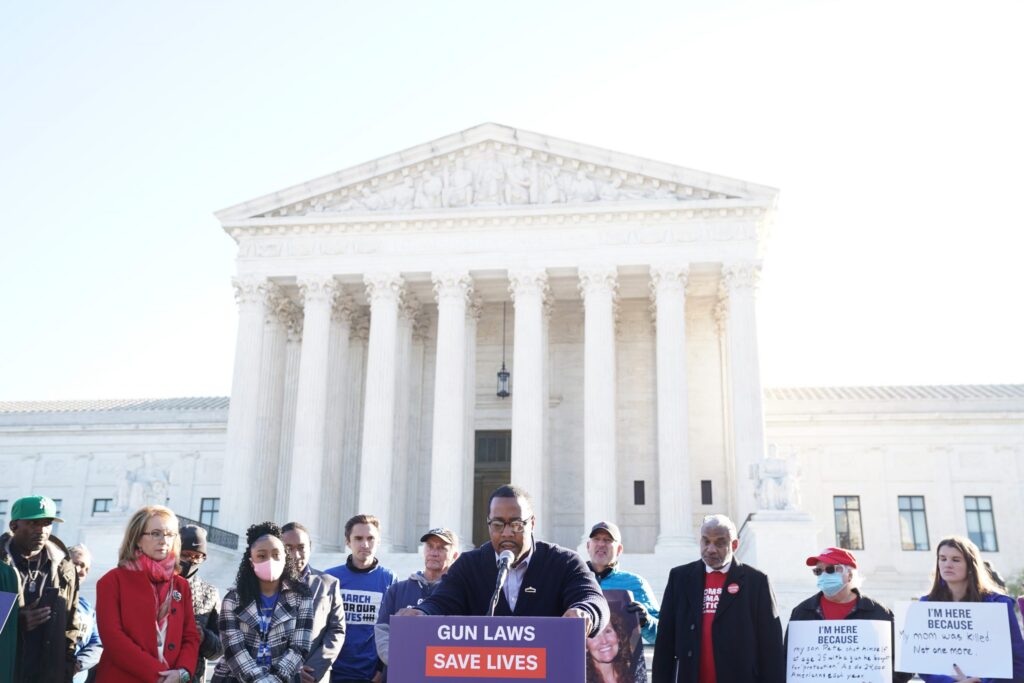
The Act was the culmination of years of collective action by survivors and families affected by mass shootings, including those from Dayton, Uvalde, Buffalo, and Sandy Hook . Organizations like March Fourth and GIFFORDS mobilized survivors to lobby Congress, while survivors like Green traveled to communities ravaged by gun violence to offer support and amplify their voices.
H.R. 1808: The Assault Weapons Ban of 2022
While H.R. 1808, the Assault Weapons Ban of 2022, successfully passed the U.S. House of Representatives, it ultimately did not become law. However, the powerful advocacy that drove it forward contributed to a significant, albeit more modest, legislative victory.
Introduced by Rep. David Cicilline, this bill aimed to ban the sale, manufacture, transfer, and possession of specific semiautomatic assault weapons and large-capacity ammunition magazines. It passed the House on July 29, 2022, by a narrow 217-213 vote, largely along party lines. However, the bill faced nearly insurmountable opposition in the Senate, where it needed 60 votes to overcome a filibuster, a threshold it could not meet.
A central figure in this advocacy was Dion Green, a survivor of the 2019 Dayton mass shooting who lost his father in the tragedy. He became a prominent activist, speaking at rallies and using his personal story to demand action. “We have to continue to come together like this, continue to be the game changers to prevent these events from happening again,” Green stated at one such event. He described the network of survivors he joined as “a network we didn’t ask to be a part of, but we’re family now”. His advocacy was tireless; he testified on legislation, founded The FUDGE Foundation to support other survivors, and even traveled to communities like Uvalde and Buffalo to offer support in the wake of their own tragedies.
The community advocacy surrounding H.R. 1808 was widespread. The grassroots organization March Fourth was pivotal, organizing the “Pass the Ban” rally on Capitol Hill on September 22, 2022, which brought together survivors and family members from at least nine mass shootings, including Columbine, Sandy Hook, Uvalde, and Dayton. They ran powerful public awareness campaigns and built a coalition representing those directly affected by gun violence.
Although the assault weapons ban stalled, this sustained pressure from survivors and activists like Dion Green contributed to a historic breakthrough just months earlier. On June 25, 2022, President Biden signed the Bipartisan Safer Communities Act into law—the first major federal gun safety legislation in 30 years. Dion Green was among the survivors invited to the White House to witness the signing.
While this law did not ban assault weapons, it represented a significant achievement born from the same unified advocacy. It included measures like enhanced background checks for buyers under 21, closing the “boyfriend loophole” for domestic abusers, and providing funding for red flag laws and mental health services . As President Biden remarked, it was “real progress, but more has to be done,” a sentiment that Green and the broader activist community continue to champion .
In summary, while H.R. 1808 did not pass, the powerful, collective voice of survivors and activists was instrumental in achieving the Bipartisan Safer Communities Act, demonstrating that their advocacy can indeed create significant change.
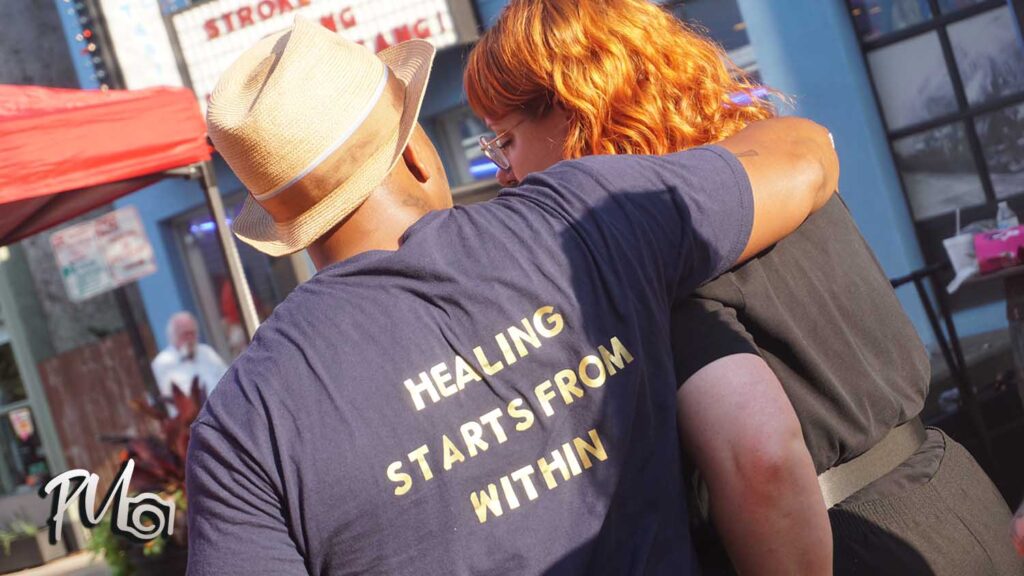
The FUDGE Foundation is a 501(c)3 charitable organization.